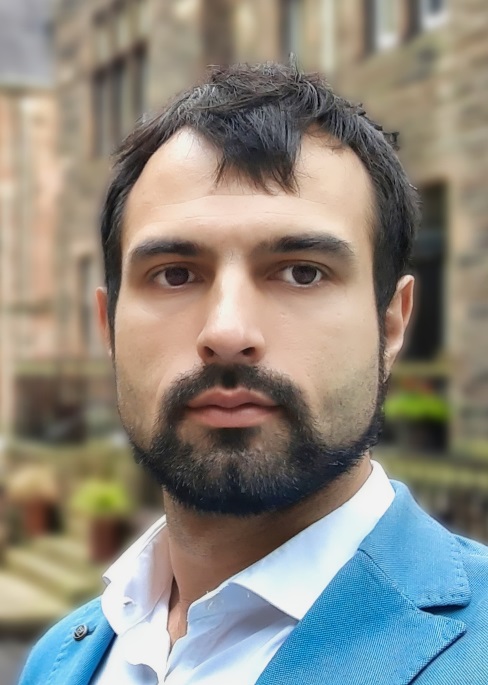
Assoc. Prof. Yordan Yordanov, PharmD, PhD (Toxicology)
Toxicology Section
Department of Pharmacology, Pharmacotherapy and Toxicology
Faculty of Pharmacy, Medical University - Sofia
Research Institute of Innovative Medical Science (InnoMedSci), Division “Artificial Intelligence in Healthcare”
Dr. Yordan Yordanov holds a Master’s degree in Pharmacy and a PhD in Toxicology from the Medical University of Sofia. His early research focused on in vitro toxicology of diverse substances, including drug-delivery nanoparticles and airborne particles/aerosols. He currently teaches Toxicology and Pharmacology to pharmacy students at Medical University - Sofia.
His current work is centered on omics-driven bioinformatics and computational toxicology, aiming to connect in vitro phenotypes with biological mechanisms and predictive modeling.
Primary Focus
- Integrative analysis: linking molecular readouts with phenotypes such as viability, oxidative stress and functional endpoints.
- Transcriptomics / RNA-seq: QC, differential expression, pathway and signature analysis, mechanistic interpretation.
- Computational toxicology: mechanism-focused interpretation, evidence structuring and risk-aware reporting.
- Data-driven methods: ML-assisted pattern discovery and predictive modeling where appropriate.
Supportive Capabilities
- Quantitative microscopy pipelines for experimental toxicology.
- Reproducible scoring, documentation and analysis workflows.
- ML-assisted segmentation and phenotyping when needed to support omics-linked hypotheses.
Collaborations and Networks
Selected collaborative links include work with Dr. Thomas Mohr in Vienna, OpenTox and Edelweiss Connect, Medical University of Graz, and University of Siena.
He participates in COST Actions including CardioPharmaGENET, STRATAGEM and Precision-BTC-Network, with emphasis on data-driven risk assessment, computational decision support and translational interpretation of pharmacological and toxicological evidence.
Core role in MU OmicsLab: omics and bioinformatics strategy, RNA-seq interpretation, computational toxicology, reproducible workflows, mentorship and collaboration building.